
Roof Sheathing in Orangevale, CA
- 4.8 from 498 Reviews
- Workmanship Warranty
- Financing Available
- Insurance Claim Help
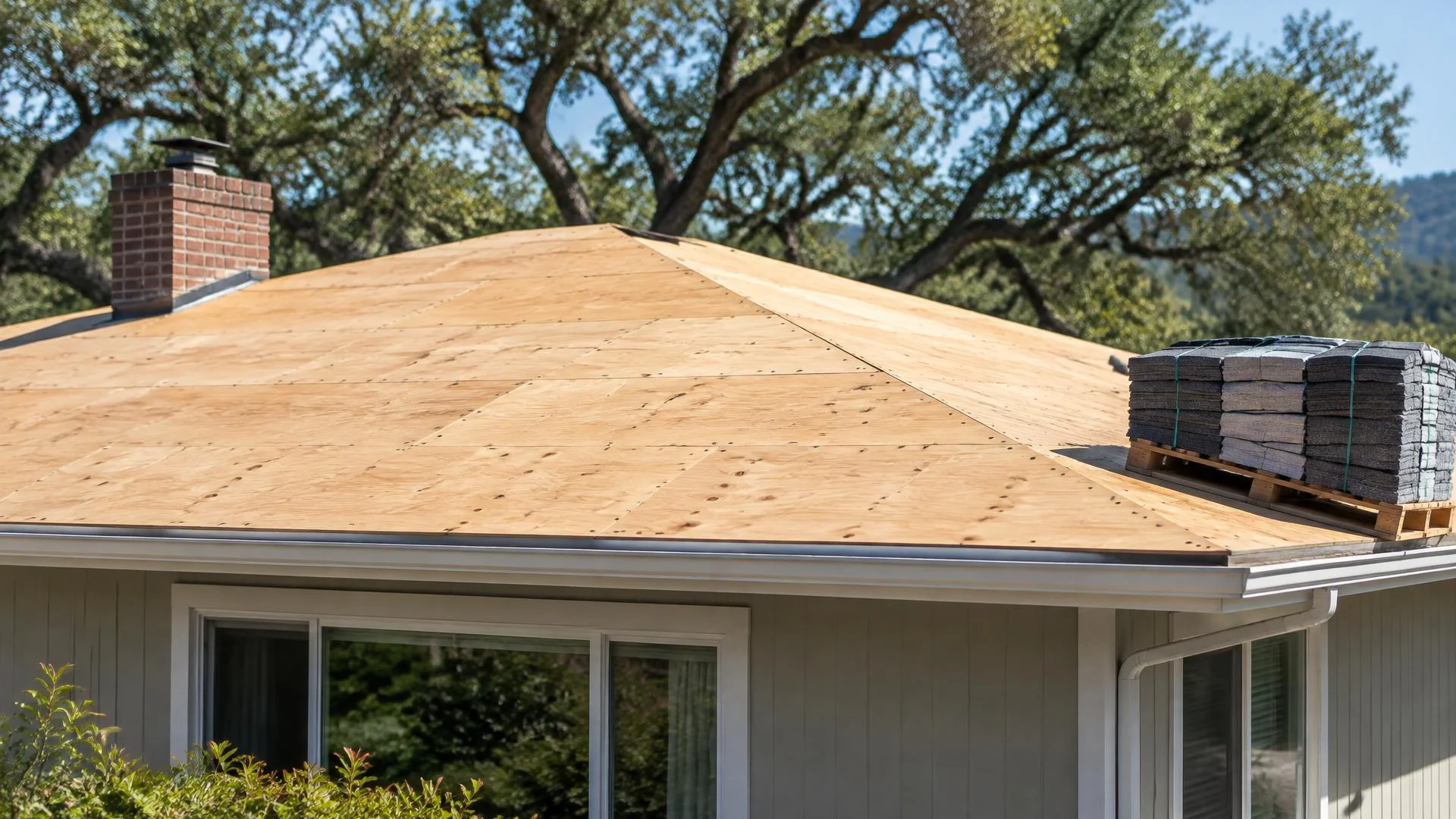
Roof sheathing is the layer of wood panels fastened to your roof framing, under the shingles. This page covers what the panels are made of, how they are fastened and what to ask before a job. For the signs that wood is going bad, see roof deck repair in Orangevale. Call (916) 526-3505 or ask for a free estimate to ask about your Orangevale roof. Bring any questions about the wood under it.
What Is Roof Sheathing on an Orangevale Home?
Roof sheathing on an Orangevale home is the layer of wood panels fastened to the roof framing. The shingles ride on top of it. Porter Roofing can look at your roof and give a free estimate.
FEMA wrote its roof sheathing fact sheet for coastal homes in high-wind areas. You can read the FEMA roof sheathing fact sheet in full. It says panels are typically 15/32 inch thick or thicker. It says oriented strand board, called OSB, or plywood may be used.
What to Do If You Think Your Roof Sheathing Is Bad
A sagging roofline or a dark, damp ceiling patch can point to trouble in the wood under the roof. Please stay on the ground and let a roofer handle the roof. Photos from the yard or from inside your home, with the date, help a roofer see what changed.
Move belongings away from any stained area and set a bucket under a drip. Those steps stay inside your home. If a storm hurt your roof, Porter meets with your adjuster to help make sure you get a fair deal.
Plywood or OSB: What Are Roof Panels Made Of?
Ask your roofer which kind of panel is planned for your roof, and why. FEMA's fact sheet gives a short comparison, shown below. The sheet was written for high-wind coastal homes, so read it as background.
| Panel type | What the FEMA sheet says |
|---|---|
| Plywood | Resists nail head pull-through better than OSB. |
| OSB | May be used. Panels are typically 15/32 inch thick or thicker. |
The sheet also says panels should be rated Exposure 1 or better. It says to use panels at least 4 feet long. Your roofer can tell you what the plan for your roof calls for.
Repair or Replace: What Should a Sheathing Job Include?
Fasteners hit the framing.The sheet lists missing framing members as a common mistake. It says the work should be checked afterward to confirm the fasteners hit the framing.
Nails are the right size.For coastal homes, the sheet gives a minimum of an 8d nail, 2.5 inches long, with a full round head. It lists the wrong fastener size and overdriven nails as common mistakes.
Panels leave a small gap.The sheet says to leave a 1/8 inch gap between panel edges unless the panel maker says otherwise. It says the gap helps prevent buckling from moisture and temperature changes.
The sheet does not say when wood must be replaced. That call belongs to a roofer who sees your roof. Some jobs need a few new panels, and some need more of the wood. Ask what the roofer found and what the plan covers.
What Changes the Price of Roof Sheathing Work?
Only a roofer who sees your roof can give a real number. Three things move the price up or down.
How much wood is bad.A handful of panels is a smaller job than a whole slope.
Why the wood failed.If a leak caused the damage, the leak has to be fixed too, or the new wood can get wet.
What sits on top and how hard it is to reach.Whatever covers the damage, whether shingles, tile or metal, is removed and put back. A steep slope or a tall house takes extra gear and care.
Ask for a free estimate to learn how much of the wood needs work. Financing available.
How to Compare Roof Sheathing Estimates in Orangevale
The Contractors State License Board publishes ten tips for hiring a contractor. It says to hire only state-licensed contractors and to check the license number on its website. It also says to get at least three bids.
- Ask each bidder how many panels will be replaced and where.
- Ask which panel type and which fasteners are planned.
- Ask for the plan in writing, as the board advises for all project expectations.
- Ask how the crew will confirm the nails hit the framing.
The board also says to avoid letting payments get ahead of the work. It says to avoid making the final payment until you are satisfied with the job. Bring these questions to any bidder, whether your home sits near Walnut Avenue or across town.
Questions About Roof Sheathing
Roof sheathing is the layer of wood panels fastened to the roof framing under the shingles. FEMA's roof sheathing fact sheet says the panels are typically 15/32 inch thick or thicker. It says OSB or plywood may be used. The sheet was written for coastal homes. Ask your roofer what fits your Orangevale roof when you request a free estimate from Porter Roofing.
FEMA's fact sheet says either OSB or plywood may be used for roof sheathing. It says plywood resists nail head pull-through better. It also says panels should be rated Exposure 1 or better. The sheet does not pick a winner for every roof. Ask your roofer which panel is planned for your home, and ask for a free estimate from Porter Roofing.
Nails are what FEMA's fact sheet describes for roof sheathing, and it says staples are not recommended in high-wind areas. For coastal homes it gives a minimum of an 8d nail, 2.5 inches long, with a full round head. Ask your roofer what fastener is planned for your Orangevale roof. You can raise it when you request a free estimate.
Yes, a small gap is normal. The FEMA fact sheet says to leave a 1/8 inch gap between panel edges unless the panel maker says otherwise. It says the gap helps prevent buckling caused by moisture and temperature changes. It also suggests looking for panels labeled Sized for Spacing. Ask your roofer about the gaps when you request a free estimate from Porter Roofing.
FEMA's fact sheet says roof sheathing panels are typically 15/32 inch thick or thicker. It wrote that for coastal homes in high-wind areas, so it is background and not a rule for your house. The right thickness depends on the plan for your roof. Ask your roofer what is planned and why when you request a free estimate from Porter Roofing in Orangevale.
Request a Free Roof Estimate in Orangevale
Tell us what you see on your roof using the form below, or call (916) 526-3505.