
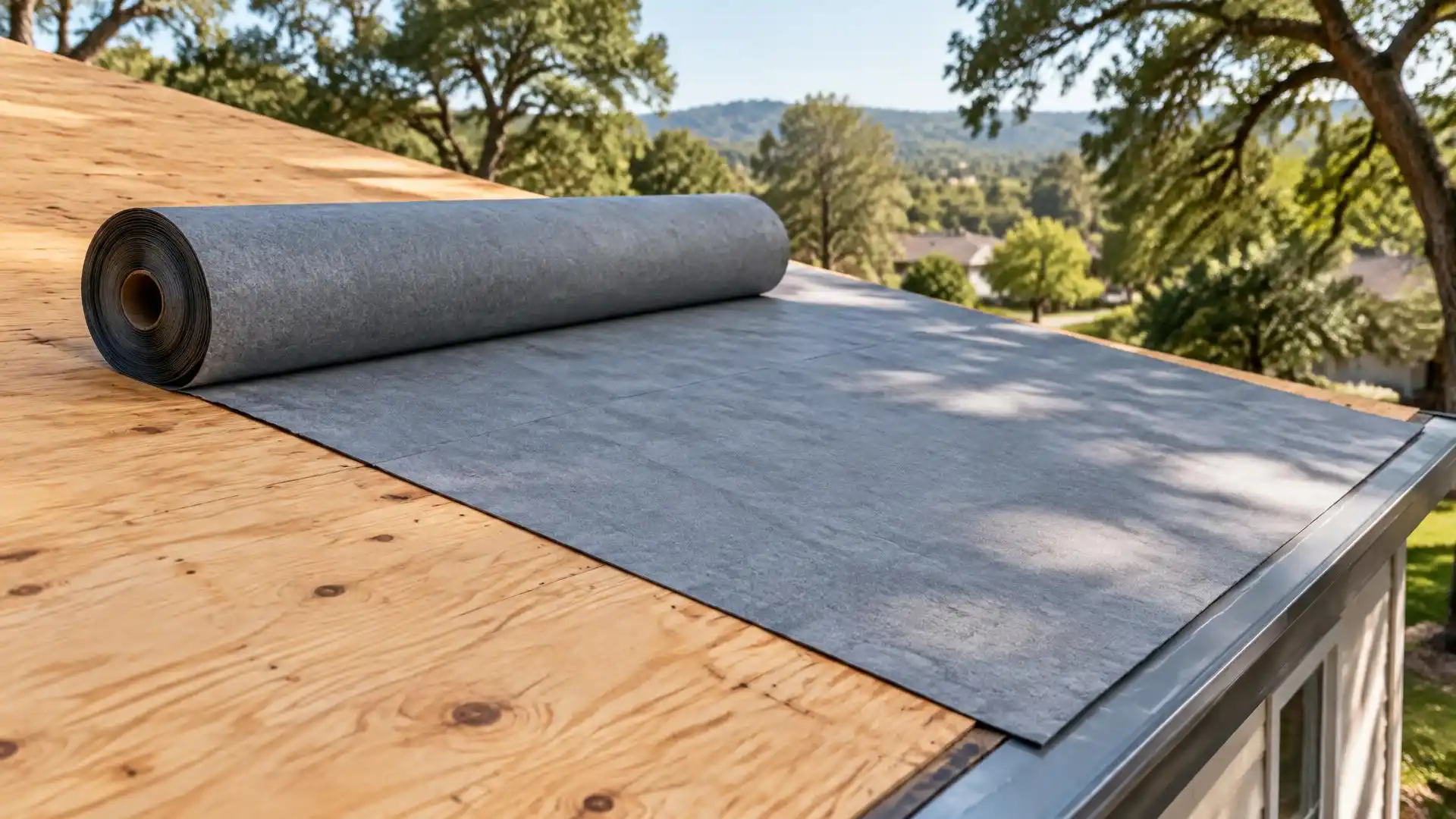
Roof Underlayment in Orangevale, CA
- 4.8 from 496 Reviews
- Workmanship Warranty
- Financing Available
- Insurance Claim Help
Underlayment is the layer between your shingles and the wood roof deck of your home. This page explains what it does, the main types and what the roofing association says in its own guidance. For how the whole shingle roof goes together layer by layer, see asphalt shingle installation in Orangevale. Call (916) 526-3505 or ask for a free estimate to ask about your Orangevale roof, and bring any layer questions.
What Is Roof Underlayment on an Orangevale Home?
Roof underlayment on an Orangevale home is the layer that covers the wood deck under the shingles. The Asphalt Roofing Manufacturers Association says shingles should not be installed directly on a wood deck. It says the deck should first be covered by a roofing underlayment. Porter Roofing offers free estimates for Orangevale roofs.
The association lists several jobs for underlayment. It acts as a secondary layer of protection that shields the deck from wind-driven rain. It helps keep the deck dry until shingles are applied. It also protects shingles from resins that may come from wood-based sheathing.
The Main Types of Roof Underlayment
The association's page describes several kinds of underlayment. The table summarizes three of them. Ask your roofer which kind is planned for your roof.
| Type | Summary of the page |
|---|---|
| Asphalt-saturated felt | Widely used as asphalt shingle underlayment. |
| Synthetic | Lighter than felt and covers more area per roll. |
| Self-adhering | Acts as a vapor retarder. Ventilation matters more when it covers the entire roof deck. |
To read all of it, see this roofing association's underlayment page. It says to consult local building codes and the shingle maker's requirements when choosing a product. Your roofer can go through it with you.
Self-Adhering Underlayment and Ventilation in Orangevale
One type comes with a ventilation note attached. The association says self-adhering underlayments act as vapor retarders. It says ventilation becomes increasingly important when they are used over the entire roof deck. Ask your roofer how an Orangevale roof will be ventilated if this type is chosen.
Synthetic products are lighter than saturated felts. They also cover more area per roll, according to the association. Which product goes on a roof is a choice to make with your roofer. Local code and the shingle maker's requirements guide that choice.
Is Underlayment Required on an Orangevale Roof?
The association says underlayment should always be used in new construction and reroofing. It also says underlayment is a required component in a fire-classified roof assembly. Most building codes require underlayment material meeting at least one of the industry standards.
The page tells readers to consult local building codes. Your roofer can confirm what the local code calls for on your roof. Ask about it while you collect estimates.
Tell us about your roof, and ask for a free estimate.
How Long Can Underlayment Wait for Shingles?
The association gives no set time limit. Its advice is short. It says shingles should be applied as soon after the application of the underlayment as possible.
Ask your roofer how the crew plans the work from deck to shingles. That question is worth asking for a reroof near Hazel Avenue or anywhere in Orangevale. Your roofer can answer that.
What to Ask Your Roofer About Underlayment
A few plain questions help you compare roofers. Ask which type of underlayment goes on your roof and why. Ask whether it meets the local building code. Ask how the roof will be ventilated if the whole deck is covered.
Porter Roofing offers free estimates for Orangevale homes. Financing available. Reach Porter Roofing at (916) 526-3505 or through the form below.
Questions About Roof Underlayment
Underlayment is a secondary layer of protection under the shingles. The Asphalt Roofing Manufacturers Association says it shields the deck from wind-driven rain. It helps keep the deck dry until shingles are applied. It also protects shingles from resins that may come from wood-based sheathing. The association lists several jobs for the layer. Porter Roofing gives free estimates in Orangevale.
The association does not name a winner between felt and synthetic. It says asphalt-saturated felt is widely used. It says synthetic products are lighter and cover more area per roll. It tells readers to follow local building codes and the shingle maker's requirements. Ask about the choice for your Orangevale home when you request a free estimate from Porter Roofing.
Shingles should not go directly on a wood deck. The association says asphalt shingles should not be installed directly on a wood deck roof substrate. The deck should first be covered by a roofing underlayment. It also says underlayment is a required component in a fire-classified roof assembly. Request a free estimate from Porter Roofing to talk about your Orangevale roof.
The association gives no set number of days for how long underlayment can stay exposed. Its page says shingles should be applied as soon after the application of the underlayment as possible. That is the guidance the page gives. Ask the crew how they handle the order of the layers on your roof. Or request a free estimate from Porter Roofing in Orangevale.
The association says underlayment should always be used in new construction and reroofing. It says most building codes require underlayment material meeting at least one of the industry standards. It also tells readers to consult local building codes and the shingle maker's requirements. Ask about what your Orangevale roof needs when you request a free estimate from Porter Roofing. It is a good time to raise the question.
Request a Free Roof Estimate in Orangevale
Tell us about your roof using the form below, or call (916) 526-3505.