
TPO vs EPDM Roofing in Orangevale, CA
- 4.8 from 501 Reviews
- Workmanship Warranty
- Financing Available
- Insurance Claim Help
TPO and EPDM are two single-ply membranes used on flat roofs. One is based on plastic and the other on rubber, and that shapes how the sheets are joined. To see how a flat roof sheds water, read flat roofing in Orangevale. This page sticks to what federal and building-safety guides say. Call (916) 526-3505 or ask for a free estimate, and we can look at your Orangevale building together.
What Is the Difference Between TPO and EPDM?
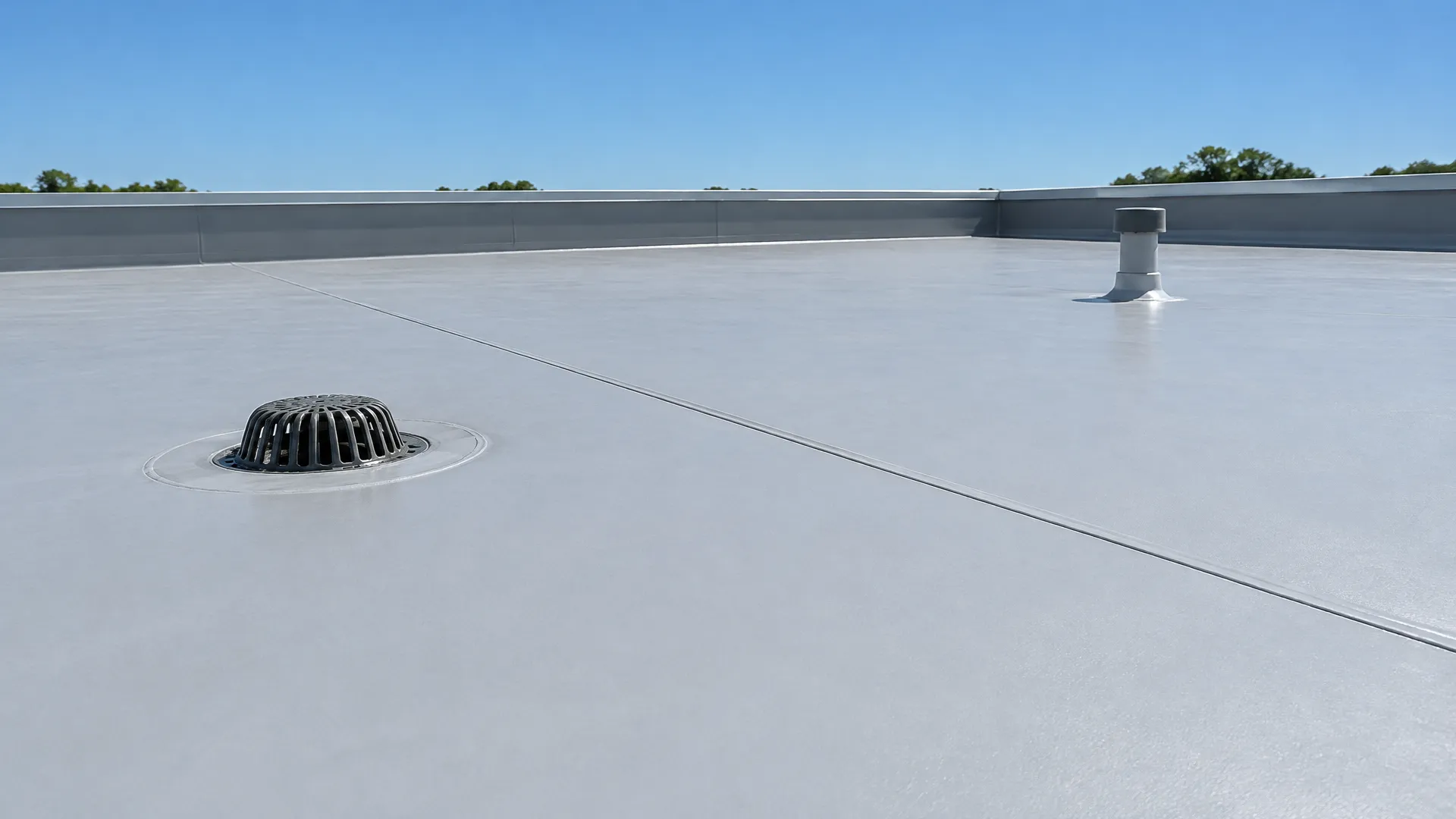
The difference between TPO and EPDM is the material. TPO is a thermoplastic, which means it is based on plastic polymers. EPDM is a thermoset, which means it is compounded from rubber polymers, and many people call it rubber roofing. Both are single-ply, so one sheet is rolled across the roof, and the seams differ.
The Building America Solution Center, a Department of Energy resource, names TPO, PVC and KEE as thermoplastics. It names EPDM as a thermoset. The Insurance Institute for Business and Home Safety, called IBHS here, groups them the same way.
How Do TPO and EPDM Compare Side by Side?
A table helps here, since the two share a few traits and split on others. You can read the full roof guide in the IBHS single-ply membrane guide. The rows below stay with what the sources state. A GSA guide to flat roofing supplies one row.
| Point | What the sources say |
|---|---|
| Material family | TPO is a thermoplastic, based on plastic. EPDM is a thermoset, compounded from rubber. |
| Common name | EPDM is often called rubber roofing. IBHS calls TPO the fastest growing single-ply type. |
| Seams | Thermoplastic seams are formed by heat or chemical welding. The GSA guide says EPDM is joined at its seams with an adhesive. |
| Sunlight | IBHS says thermoset membranes have proven they can withstand the damaging effects of sunlight. |
| Strength layer | Most thermoplastic membranes include a reinforcement layer, usually polyester or fiberglass. |
| Petroleum | The GSA guide says EPDM is vulnerable to petroleum products and plastic roofing cement. |
The table gives no winner and no lifespan. Which sheet fits depends on your deck, your drains and what sits on the roof. A roofer weighs those before naming one.
Why Do Seams Matter on an Orangevale Flat Roof?
Every membrane roof has seams where one sheet meets the next. IBHS says thermoplastic seams are as strong as or stronger than the membrane itself. The GSA guide adds that wind can tear a roof at loose seams.
For a shop or office near Cable Park Shopping Center, the seams deserve a question at the estimate. Ask how the sheets will be joined and who looks at each seam when the work is done. Porter Roofing does commercial work in Orangevale, and we can explain the seams on your roof.
How Do Color and Heat Change the Choice?
Sunlight is part of any flat roof choice. The Environmental Protection Agency calls high solar reflectance the most important trait of a cool roof. It lists single-ply membranes with light or cool pigments among low-slope cool roof products.
The same EPA page says low-slope cool roofs may need periodic cleaning to keep their reflectance up. The EPA page does not tie a color to TPO or EPDM. Ask what colors your membrane would come in, and whether it counts as a cool roof product.
Tell us what you know about the building, and ask for a free estimate.
What Should an Orangevale Roofer Look At Before You Choose?
For a building near the Orangevale Library, we start with what already sits on the roof. Drains, rooftop units and old patches all affect which sheet makes sense. We look at those for you.
We also look at the deck beneath. IBHS says metal is the most common deck under single-ply sheets. It adds that the International Building Code sets a slope of at least a quarter inch per foot.
Oil and fuel matter too. The GSA guide says EPDM is vulnerable to petroleum products. If a rooftop unit drips, tell us at the estimate, and we will note where it drips.
What Makes One Flat Roof Membrane Cost More Than Another?
Prices differ from roof to roof, and this page does not quote one. The sheet itself is one factor, and the work around it counts as much. Three factors change the number on a bid.
Roof area and corner count.A larger roof with more corners needs more sheet and more seams.
How the sheet is held down.The Solution Center says single-ply sheets can be mechanically attached or fully adhered, and each method takes different work.
What is on the roof.Drains, vents and rooftop units add detail work around the sheet.
A written scope that names the membrane and its attachment makes your bids comparable. Porter Roofing gives free estimates on commercial roofing. Financing available.
Questions About TPO and EPDM
The main difference between TPO and EPDM is the material. TPO is a thermoplastic based on plastic polymers, and EPDM is a thermoset compounded from rubber polymers. IBHS says thermoplastic seams are formed by heat or chemical welding. A GSA guide says EPDM seams use an adhesive. Porter Roofing can tell you which one your Orangevale building has, so request a free estimate.
The IBHS and Department of Energy guides we read name no winner between TPO and EPDM for a flat roof. IBHS calls EPDM the most common thermoset and TPO the fastest growing single-ply type. Your deck, your drains, your rooftop units and the sunlight on the roof all play a part in the choice. Ask Porter Roofing to look at your Orangevale building, and request a free estimate.
TPO seams and EPDM seams are joined in different ways. IBHS says thermoplastic membranes, which include TPO, have seams formed by heat or chemical welding. It says those seams are as strong as or stronger than the membrane itself. A federal GSA guide describes EPDM sheets as glued together at the seams. Ask Porter Roofing how the seams on your building would be made.
Color can matter on a flat roof because sunlight heats the surface. EPA says solar reflectance is the top trait of a cool roof. It lists single-ply membranes with light or cool pigments as one low-slope option. The EPA page does not tie a color to TPO or EPDM. Ask Porter Roofing which colors your membrane could come in, and request a free estimate for your Orangevale building.
Ask a roofer which membrane the quote names and how the sheets will be joined. Ask how the sheet will be attached, since single-ply sheets can be mechanically attached or fully adhered. Ask what happens at drains, vents and rooftop units. Porter Roofing can answer these for your building, so request a free estimate and bring the written scope to compare.
Request a Free Flat Roof Estimate in Orangevale
Tell us about your building using the form below, or call (916) 526-3505.