
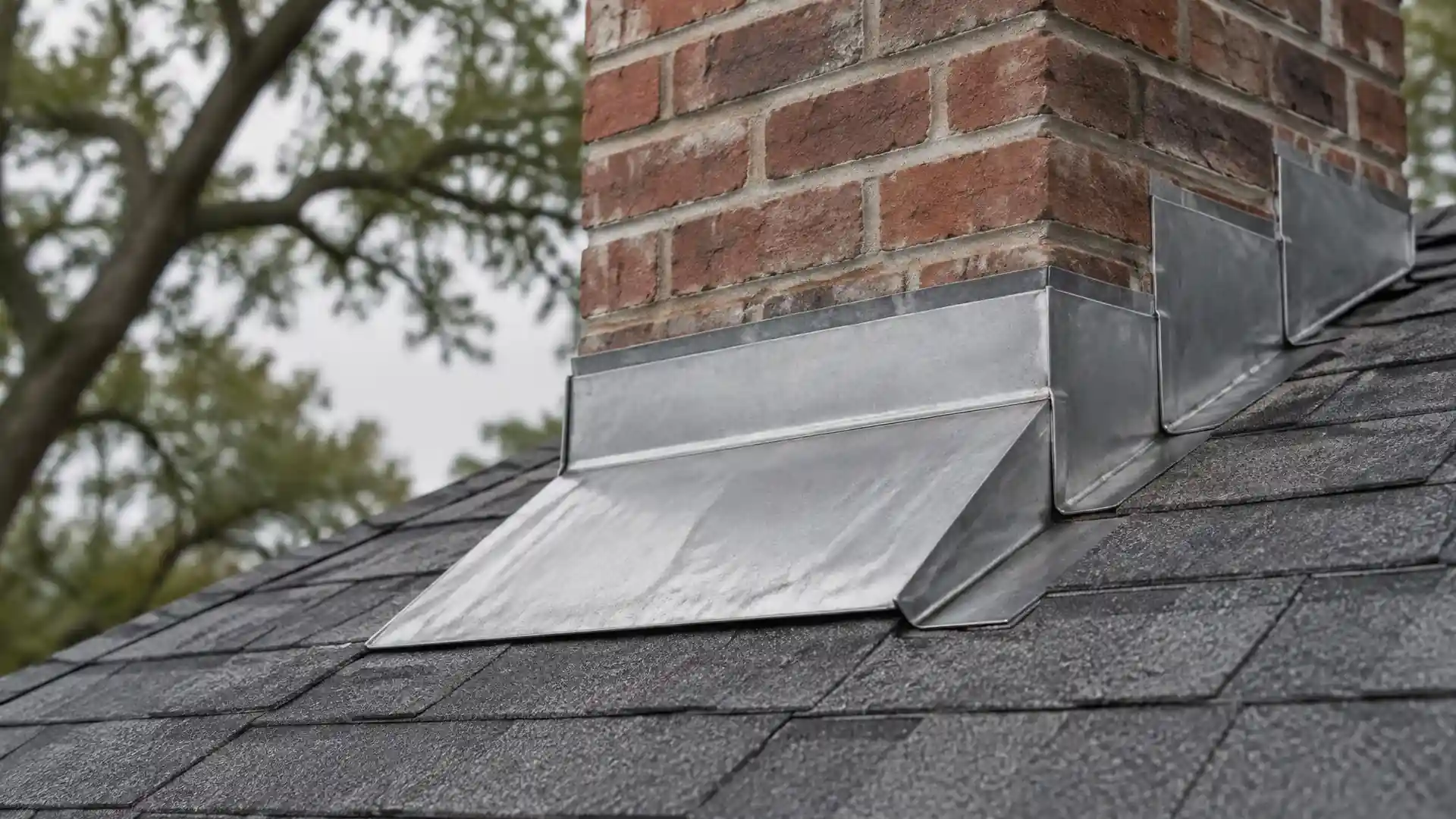
What Is Roof Flashing in Orangevale, CA
- 4.8 from 496 Reviews
- Workmanship Warranty
- Financing Available
- Insurance Claim Help
Roof flashing is the thin, waterproof material that keeps rain out of the joints on your roof. When one of those joints fails, flashing repair in Orangevale is the fix. This page names each piece, shows where it goes and explains why layer order matters on your roof. If you see a stain by a chimney or a wall, call (916) 526-3505 or ask for a free estimate.
What Is Roof Flashing on an Orangevale Home?
Roof flashing on an Orangevale home is a thin, waterproof material that directs water down and out of the building. The Building America Solution Center, funded by the Department of Energy, says it is often metal, rubber or vinyl. It sits where a roof meets a wall, a chimney or a pipe, and in the valleys of the roof.
Porter Roofing works on homes near Oak Avenue and across Orangevale. Any roof there with a chimney, a tall side wall or a plumbing vent has joints that need flashing. Each joint is a place where water can get in.
The Pieces of Flashing and Where Each One Goes
Flashing is a set of pieces, each shaped for one kind of joint. Here are the main ones. Together they cover the places where a roof meets a wall, a chimney or a pipe. Clay roofs need a J-channel in place of the usual L-shaped step flashing.
| Piece | Where it goes |
|---|---|
| Step flashing | L-shaped pieces along the seam between a roof and a wall |
| Kickout flashing | A piece that directs water flowing down the roof along a wall |
| Cricket flashing | Sloped flashing around and above a chimney |
| Valley flashing | Metal laid in the valleys of the roof |
| Boot or collar flashing | A collar around a pipe, plumbing stack, flue or vent that comes through the roof |
Why the Order of the Layers Matters
Flashing has to work with the layers around it. Step flashing goes under the siding, not over it. About an inch of the metal should show beneath the bottom course of siding.
For pipes and vents, the guide says flashing should overlap the shingles as if it were a shingle itself. Water then runs down over each layer. That is how flashing directs water down and out.
What Failed Flashing May Look Like
Failed flashing can leave marks on the siding. The source lists a few signs. They are below.
- Paint and siding. Discoloration, bubbling paint, or siding that looks soft or deteriorating.
- Wall stains. Rain that overflows a gutter can spill down a wall, carry debris and stain it.
Keep your feet on the ground and let a roofer handle the roof. Call us if you see any of these signs. We will talk through what we find, in plain words.
What Flashing Is Made Of
Flashing comes in more than one material. Metal valley flashing comes in a 24-inch-wide product. Self-adhered membrane is also used in valleys.
What Porter Roofing Looks At on an Orangevale Roof
When we visit a home near Greenback Lane, we look at the stain and talk through what we find. Then we go over your options. A free estimate is how it starts.
For a look at what missing flashing can mean, read this guide to missing roof and wall flashing. It says to hire a contractor if flashing details are missing or need attention. Leave the roof to a roofer. Your part is to call.
Tell us where it is, and we will take it from there.
Questions About Roof Flashing
Step flashing goes under the siding, not over it. The source says about an inch of the metal should show beneath the bottom course of siding. For pipes and vents, flashing should overlap the shingles as if it were a shingle itself. That order lets water run down over each layer. A roofer sets the order for each joint on your Orangevale home. We can look at yours.
The flashing around a chimney is called step flashing, with sloped cricket flashing around and above it. The Building America Solution Center names both. It says step flashing comes in various sizes. Pieces of 5 by 7 inches and 4 by 8 inches are common. Porter Roofing can look at the chimney on your Orangevale roof and name each piece for you in plain words.
Roof flashing is often made of metal, rubber or vinyl. The source describes it as a thin, waterproof material. It names metal valley flashing, and boot or collar flashing for pipes, plumbing stacks, flues and vents. Each joint on a roof calls for its own piece. Self-adhered membrane is also used in valleys, per the source. We can walk you through each piece on your Orangevale roof.
Roof flashing is a job for a roofer, not a do-it-yourself project. The source says pipe flashing overlaps the shingles and step flashing sits under the siding. A roofer builds each joint in that order. It also says to hire a contractor if flashing details are missing or need attention. Stay on the ground, tell us where you see stains, and call Porter Roofing for a free estimate.
Roof flashing may have failed when you see discoloration, bubbling paint, or soft or deteriorating siding. The source lists these signs. Peeling paint and warping siding also point to moisture. It also says rain that overflows a gutter at a wall can carry debris down and stain the wall. These signs are worth a closer look by a roofer. Call Porter Roofing, and we will look at it with you.
Request a Free Roof Estimate in Orangevale
Tell us where you see a stain near a chimney, wall or vent. Send the form or call (916) 526-3505 to begin.