
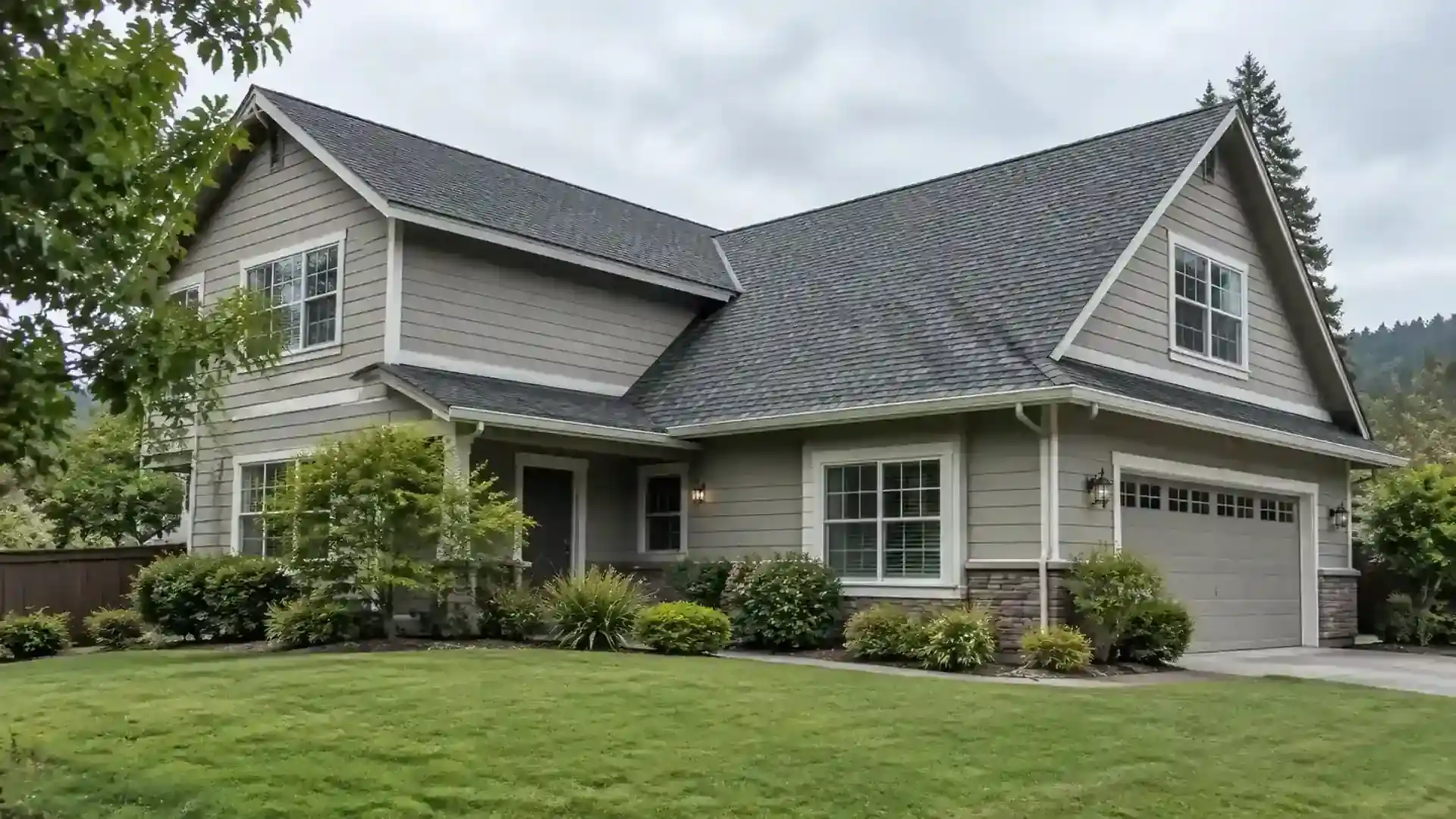
What Is a Roof Valley in Orangevale, CA
- 4.8 from 501 Reviews
- Workmanship Warranty
- Financing Available
- Insurance Claim Help
The NRCA glossary entry for valley defines a roof valley as the inside angle where two sloping roof planes meet. This page explains what a valley does on an Orangevale roof, what sits under it and why roofers watch it. To see how a worn one gets fixed, read about roof valley repair in Orangevale. Call (916) 526-3505 or ask for a free estimate if a stain has you wondering about your valleys.
What Is a Roof Valley on an Orangevale Home?
A roof valley is the inside angle where two sloping roof planes meet. From the yard, it shows as a line running down the roof between two slopes. A roofer can point out each valley on your Orangevale roof.
The Department of Energy lists valleys among the areas of a roof that are vulnerable to water intrusion. Its guide says a valley should be sealed along its entire length. That means the seal runs the full length, not only at the worst spot.
Why Does a Valley Matter to the Whole Roof?
The Department of Energy says the roof is the main defense against rain, snow and ice. It says water that gets through a roof can damage insulation, encourage mold and pests, and cause structural rot. A valley that lets water in can start any of those problems. The guide adds that a roof should shed water in every season, including extreme weather.
The Building America Solution Center adds that water entering through the roof can spread along the framing. It names damage to insulation, ceilings, walls, floors and basements. A stain on one ceiling may be the visible end of a longer path.
The National Park Service shows what a clogged valley can do. Leaves had blocked the connection between the valley and the gutter. Flowing water backed up under the shingles and seeped into the woodwork of the cornice beneath the valley.
What Sits Under and Inside a Valley?
Federal guides describe the layers in and under a valley this way, from the wood up to the surface.
| Layer | What the federal guides say |
|---|---|
| Roof sheathing | The Department of Energy says to clean the wood deck before the membrane goes on. |
| Self-sealing membrane | The Department of Energy gives bituminous peel-and-stick material as an example. Center it on the valley line, with no gaps, creases or folds. |
| Roofing felt | The Department of Energy puts the membrane on the sheathing, beneath the roofing felt. |
| Valley surface | For shingle roofs, the Building America Solution Center recommends metal valleys over woven or abutted shingle valleys. |
Sections of membrane run from the lowest point of the valley to the highest. Each overlaps the next by 6 inches, shingle style, so water flows down the valley unobstructed. The Building America guide also says to keep fasteners at least 6 inches from the valley center.
What to Do If You See a Stain Below a Valley
A brown ceiling stain or a damp patch on a wall can mean water got past the roof. Please stay on the ground, because the roof is a job for a roofer. Every step below can be done from inside your home.
Move belongings out of the way of the stain, and set a bucket where it drips. Photograph the stain from inside, and note the date you first saw it. Dated photos help a roofer see what changed.
If storm damage caused the stain, Porter meets with your adjuster to help make sure you get a fair deal. Your dated photos give that meeting a starting point. Keep them together in one folder on your phone.
Tell us where it is and when you first saw it, then ask for a free estimate.
How Do Orangevale Rain and Leaves Test a Valley?
A National Weather Service climate memo for Sacramento says over half of annual precipitation falls November through February. A valley has to carry that water off the roof. It cannot do that job while it is packed with debris.
The National Park Service says to check valleys for drainage twice a year and clean them as needed. It adds that cleaning is the time to look for holes in the valley flashing. Leave that work to a roofer and stay on the ground.
In the park service example, a valley left uncleaned for a couple of years held rotting debris. A tree was starting to take root in it. If branches hang over your roof, ask a tree service about them.
How to Compare Estimates for Valley Work
California's Contractors State License Board lists tips for hiring a contractor, and three of them fit a valley job.
- Check each contractor's license number online at the board's website.
- Get at least three bids, as the board advises, and check references.
- Get all project expectations in writing before you sign.
Ask each bidder how the valley will be sealed and what goes under the surface. The board warns against letting payments get ahead of the work. It also says to hold the final payment until you are satisfied with the job. Porter Roofing works under CSLB license #1055310, in classifications C-39 and B.
What Changes the Price of Valley Work in Orangevale?
A real number comes only after a roofer sees the valley, and four things move it.
How far the problem runs.A short damaged stretch takes less work than a valley that needs sealing end to end.
What the valley is made of.A metal valley and a woven shingle valley are built differently, so their repairs differ.
What lies under it.Wet or soft wood and a failed membrane add repair work before the new valley goes in.
How hard it is to reach.Roof pitch and house height change how much set up the crew needs.
A free estimate tells you what the valley needs. Financing available.
Questions About Roof Valleys
The valley of a roof is the internal angle formed where two sloping roof planes meet. That is how the National Roofing Contractors Association defines it in its glossary. Rain from both planes runs into that angle. The Department of Energy lists valleys among the areas vulnerable to water intrusion. A roofer can point out each valley on your Orangevale home, and Porter Roofing gives free estimates.
Roof valleys can leak, and the Department of Energy lists them among the areas vulnerable to water intrusion. The National Park Service describes a valley clogged with leaves. Backed-up water flowed under its shingles into the woodwork below. A roofer can find where water is getting in. Stay on the ground, take dated photos from inside and request a free estimate from Porter Roofing.
A roof valley uses a self-sealing membrane under a metal or shingle surface, according to the Building America Solution Center. It says metal valleys are recommended over woven or abutted shingle valleys on shingle roofs. The membrane must be water impermeable and must durably adhere to the roof deck. Which choice fits your roof is a question for a roofer at your free estimate.
A self-sealing membrane goes under the shingles in a roof valley, according to the Department of Energy. It applies the membrane to the roof sheathing, beneath the roofing felt. Bituminous peel-and-stick material is its example. The guide says to center the membrane on the valley line and overlap sections by 6 inches. Ask Porter Roofing for a free estimate to see what your valley needs.
If you see a stain under a roof valley, stay on the ground and call a roofer. The Department of Energy says water entering a roof can damage insulation, encourage mold and pests, and cause structural rot. Take dated photos from inside, set a bucket under any drip and move belongings away. Then request a free estimate from Porter Roofing in Orangevale.
Request a Free Roof Valley Estimate in Orangevale
Tell us about the stain or the roof lines you wonder about using the form below, or call (916) 526-3505.