
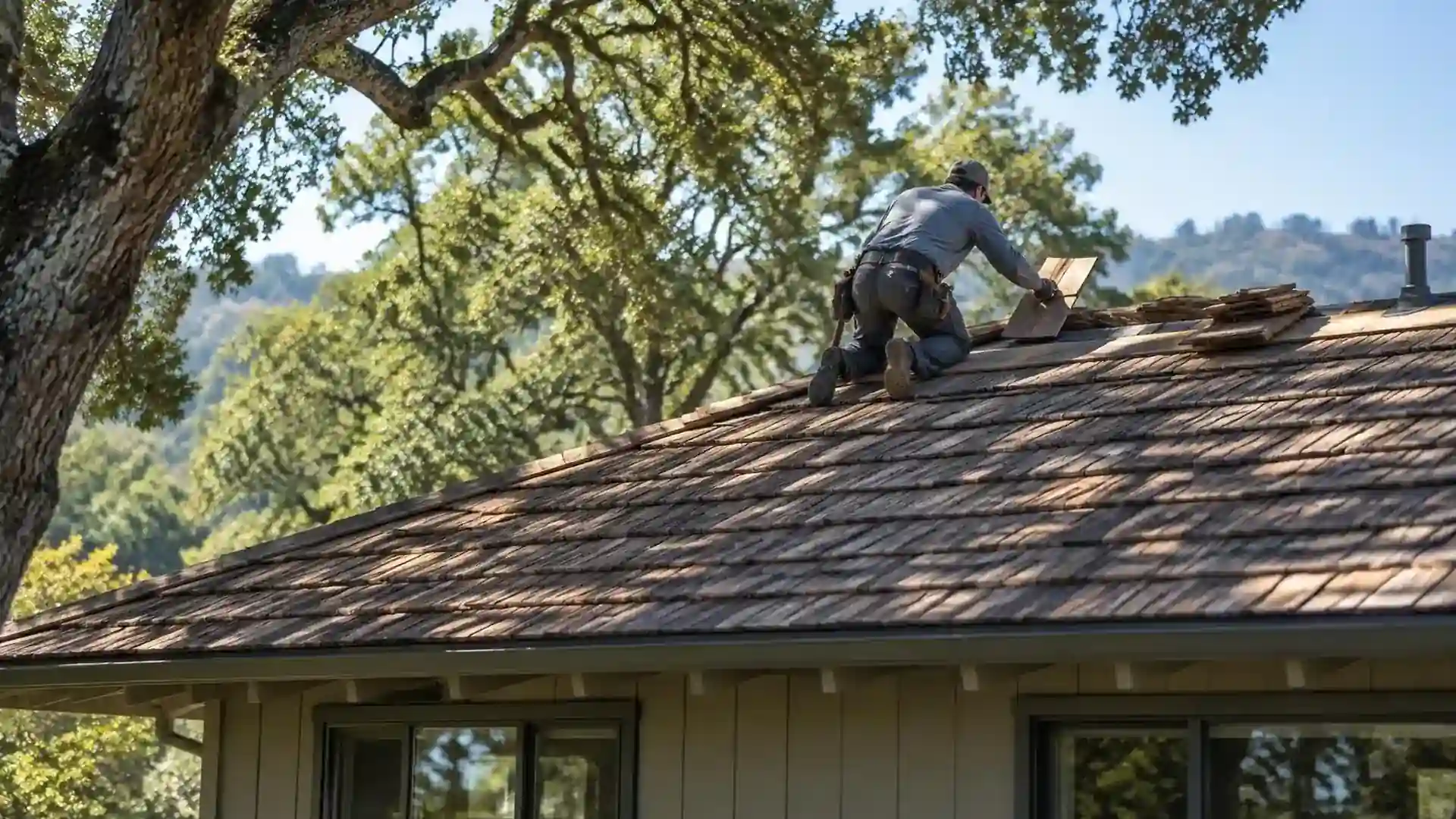
Wood Shake Roofing in Orangevale, CA
- 4.8 from 490 Reviews
- Workmanship Warranty
- Financing Available
- Insurance Claim Help
A wood shake roof has a warm, natural look that many homeowners love. It also needs more thought than most roofs, especially when it comes to fire. Porter Roofing handles wood shake roofing in Orangevale, CA. This page explains what shake is and how fire ratings work. It also covers wood-look options and what to ask before you choose. Call (916) 526-3505 or ask for a free estimate.
What Should You Know About Wood Shake Roofs in Orangevale?
A wood shake roof in Orangevale is made of natural wood, so its fire class needs a close look. Fire class shows how much protection a roof covering gives against fire. A University of California fire guide says shakes without fire retardant carry no rating. A roofer can explain what fire class your roof would carry and what that means for your home.
- Rustic look. A split face gives handsplit shakes a naturally rustic look, says the Insurance Institute for Business & Home Safety.
- Gray with age. Cedar shakes weather from reddish brown toward gray, says the same institute.
- Weak spots. The university guide says roofs generally ignite at edges and intersections, so those areas get extra attention.
- Treated shakes. Fire-retardant pressure-treated shakes are the most common Class B roofing material, the guide says.
Why Does Fire Rating Matter for Wood?
Fire is the big question for a wood roof. A roof has a large surface, so embers can land on it.
Coverings get a fire rating of Class A, B or C. Class A gives the most protection and Class C the least. Three tests set the rating: fire spreading into the attic, flame spreading across the covering and burning embers. For more, read the UC roof fire protection guide.
The university guide also says untreated shakes should not be used in wildfire-prone areas. Orangevale has many trees near homes, and the guide says to keep gutters clear of debris.
Which Wood-Look Roof Fits Your Home?
Homeowners who want a wood look have a few paths. The table sets them side by side.
| Option | Worth knowing |
|---|---|
| Fire-retardant treated shake | The most common Class B wood choice |
| Untreated shake | Carries no fire rating and is not for wildfire-prone areas |
| Composite shake look | Synthetic shingles made to look like wood, so ask the maker for the fire class |
| Class A coverings | Clay or concrete tile, fiberglass asphalt shingles and metal roofing are Class A examples |
A roofer can explain how each choice fits your house. Many Orangevale homes sit under tall trees, so fire class and gutter debris deserve a close look.
Want to talk through your options?
Can a Wood Roof Reach a Higher Fire Class?
A wood roof can reach a higher class with extra layers under it. Some coverings need an underlying material or special installation to earn their rating. That is called a rating by assembly.
The university source says Class B and Class C coverings can typically meet Class A with added underlayment. Common choices are a mineral-surfaced cap sheet or fiberglass gypsum board.
The university guide cites Chapter 7A of the California Building Code. It says a roof assembly must be installed according to its listing. Ask the Sacramento County building office which rules apply at your Orangevale address.
Edges, Valleys and Gutters Need Extra Care
Edges.Keep gutters clean and repair damaged areas. Metal flashing goes in at vulnerable spots such as along the fascia.
Valleys.Open valleys collect debris. Metal flashing over a mineral-surfaced cap sheet improves fire resistance.
Roof-to-wall joints.Debris builds up where a roof meets a wall, and it can ignite. Dormers add more of these joints.
Watch these spots on any Orangevale roof, where oak leaves and twigs collect in gutters and valleys.
What Changes the Cost of a Wood Shake Roof?
No two wood roofs cost the same. The size and shape of the roof come first. The kind of wood roofing and its fire treatment change the total.
Layers under the shakes count too. A higher fire class may call for added underlayment. Wood under the old roof may need repair first. Steep slopes and tight access add set-up work.
For a real cost on your Orangevale home, ask Porter Roofing for a free estimate. Porter Roofing also offers financing.
Ready to price a wood roof?
Plan Ahead Before You Choose
Ask the roofer which fire class the roof will carry and what it is made of. Ask for the listing and the maker's instructions in writing. Ask the building office if the job needs a permit, and who pulls it.
For an Orangevale address, Sacramento County is the place to begin. Move cars and patio furniture away from the house. Plan for noise and debris while the crew works, and keep pets inside. Orangevale homes near Shady Oaks Disc Golf Course on Hazel Avenue, and those across town, can follow the same plan.
Check the Finished Wood Roof
When the work is finished, take a walk around your house with the roofer. Look up from the yard, and ask about anything that seems off. After the first big Orangevale storm, look again.
- The roofer shows you the fire class in writing.
- Rows are even and every piece sits flat.
- Metal at valleys, edges and walls sits snug.
- Gutters are clear and nothing is left in the yard.
- The ceiling and attic stay dry after rain.
Care for a Wood Shake Roof Each Season
Debris is the main enemy of a wood roof. Oak leaves and twigs pile up in Orangevale gutters and valleys, and they can catch embers. Keep them clear.
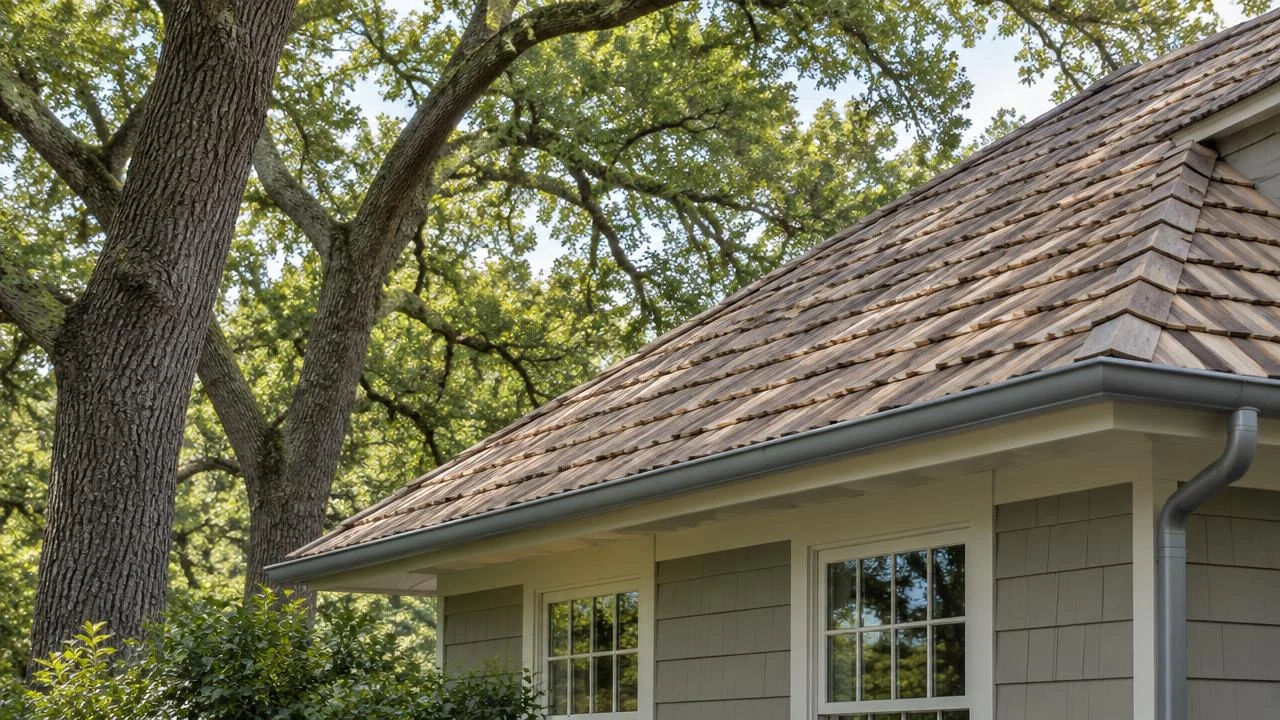
Have a tree service look at branches hanging above your roof. Look at the roof from the ground each spring and fall, and after big storms. If something looks off, call (916) 526-3505 or ask for a free estimate.
Wood Shake Roof Questions in Orangevale
A wood shake roof's cost depends on the size and shape of the roof. The kind of wood roofing, its fire treatment and any added underlayment change the total. Wood under the old roof may need repair first. Steep slopes and tight access add set-up work. Your roofer must look at the roof before quoting its actual cost. Porter Roofing gives free estimates, and financing is available.
Wood shake roofs can be a fire risk when the wood is untreated. Untreated shakes carry no fire rating, and a university source says not to use them in wildfire-prone areas. Fire-retardant treated shakes are the most common Class B option. Class A coverings give the most protection. Ask a roofer which class your roof will carry, and get it in writing.
A wood shake roof needs the fire class your local rules call for. Class A gives the most protection and Class C the least. Treated shakes are most often Class B, and added underlayment can help some coverings reach Class A. Local codes may add rules, so ask Sacramento County what applies at your Orangevale address. Ask the roofer to put the class in writing.
A wood look is possible without real wood shake. Composite shingles are synthetic and made to look like wood or slate. Some homeowners choose them for that look. Ask the maker for the fire class and the warranty terms, and get both in writing. A roofer can compare the options for your home. Ask Porter Roofing for a free estimate.
All Roof Replacement Services in Orangevale
Get Your Free Wood Shake Roof Estimate in Orangevale
Tell us about your roof and the look you want. Use the form, or reach us at (916) 526-3505.